

Above the City$142.00 USD
Preparing the gallery…
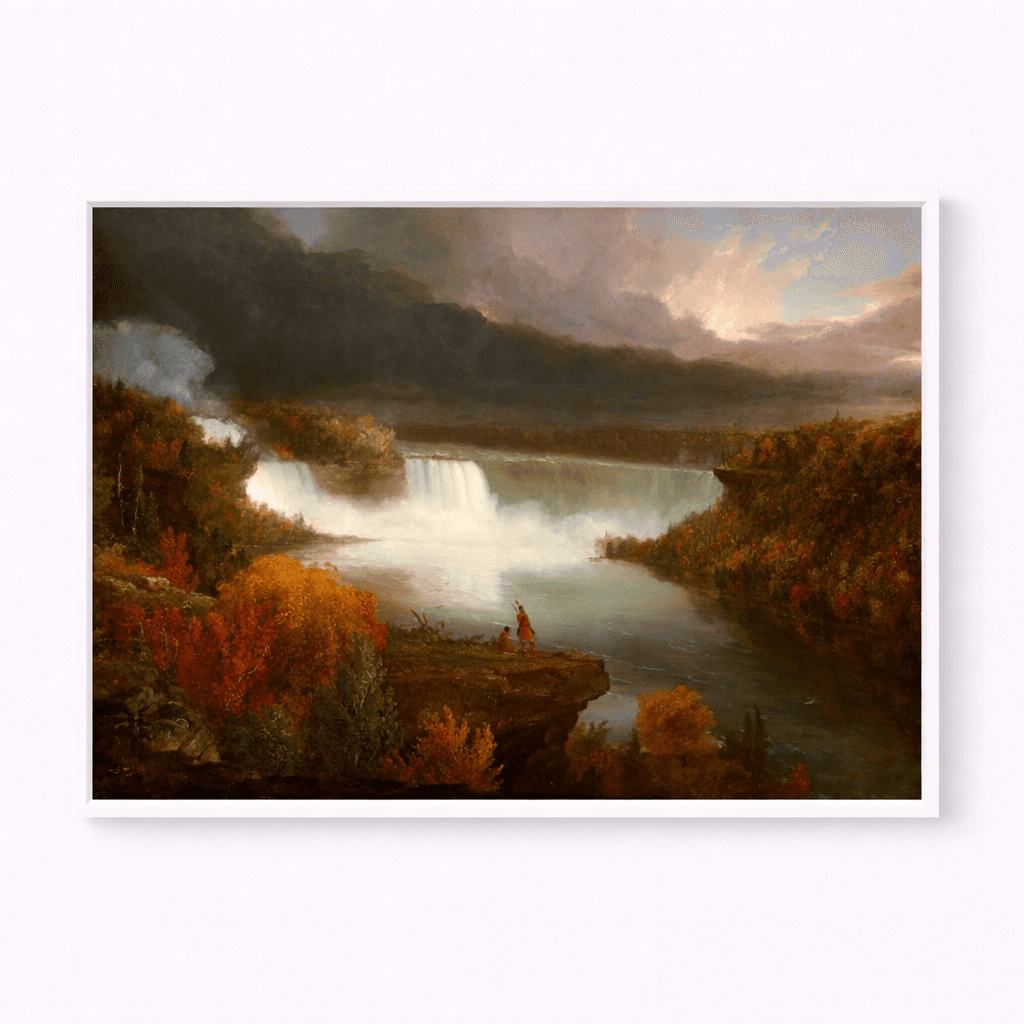
Distant View of Niagara Falls (1830) by Thomas Cole is a dramatic landscape that captures the grandeur and sublime power of one of North America’s most iconic natural wonders. Painted in 1830, the composition presents the falls from a sweeping vantage point, framed by richly colored autumn foliage and a vast, atmospheric sky. Cole, the founder of the Hudson River School, used Niagara as a symbol of untamed wilderness and the spiritual magnitude of the American landscape. Small human figures in the foreground emphasize the overwhelming scale of nature, reinforcing themes of awe and transcendence. Created during a formative period in American landscape painting, the work reflects Cole’s vision of nature as both majestic and morally elevating. Today, the painting stands as a significant example of early 19th-century American Romanticism and the emerging national identity expressed through landscape art.
READ MORE⌁ 7 Low stock
$159.00 USD
Tax included.
Secure checkout is represented as a local demonstration only.
The work
Distant View of Niagara Falls (1830) by Thomas Cole is a dramatic landscape that captures the grandeur and sublime power of one of North America’s most iconic natural wonders. Painted in 1830, the composition presents the falls from a sweeping vantage point, framed by richly colored autumn foliage and a vast, atmospheric sky. Cole, the founder of the Hudson River School, used Niagara as a symbol of untamed wilderness and the spiritual magnitude of the American landscape. Small human figures in the foreground emphasize the overwhelming scale of nature, reinforcing themes of awe and transcendence. Created during a formative period in American landscape painting, the work reflects Cole’s vision of nature as both majestic and morally elevating. Today, the painting stands as a significant example of early 19th-century American Romanticism and the emerging national identity expressed through landscape art.