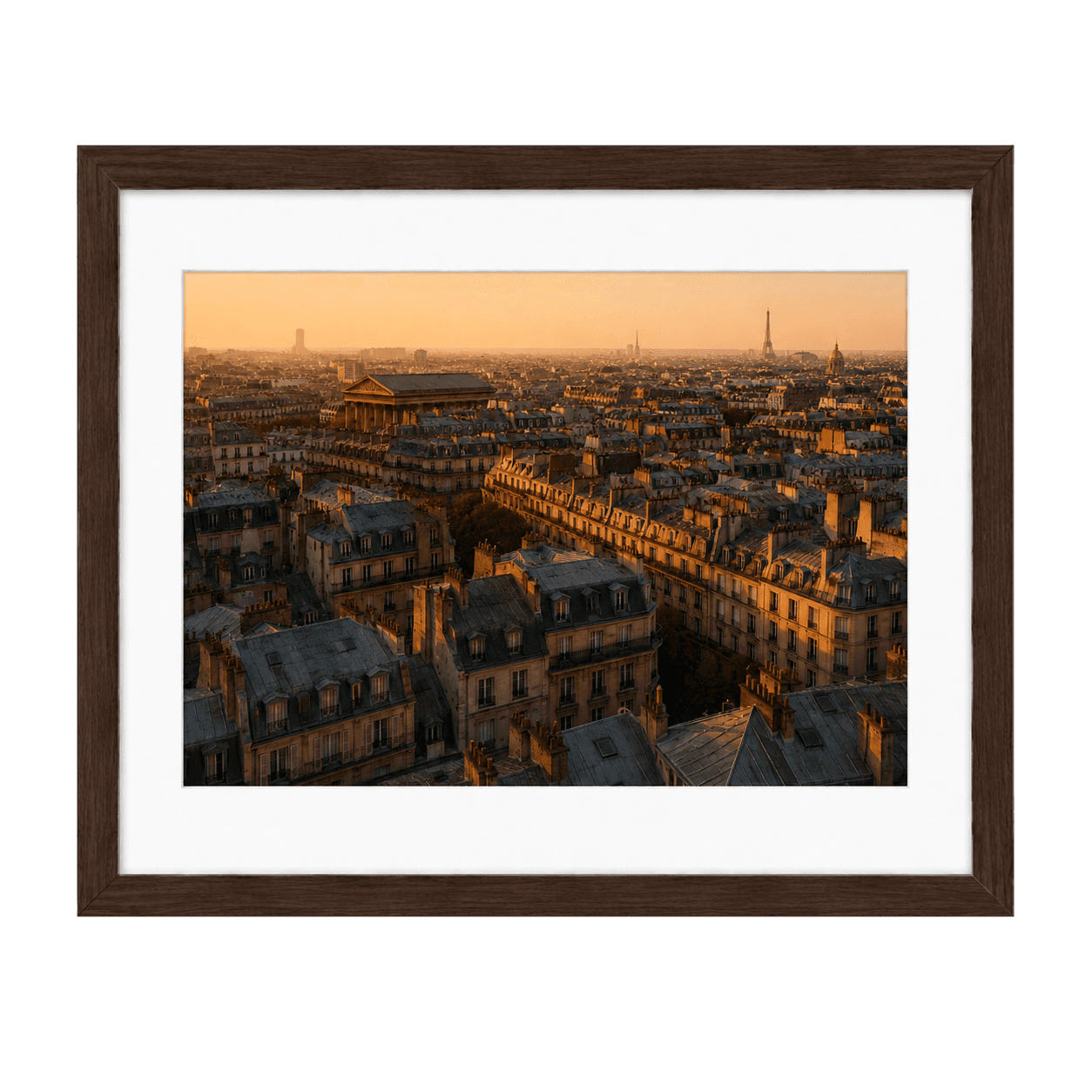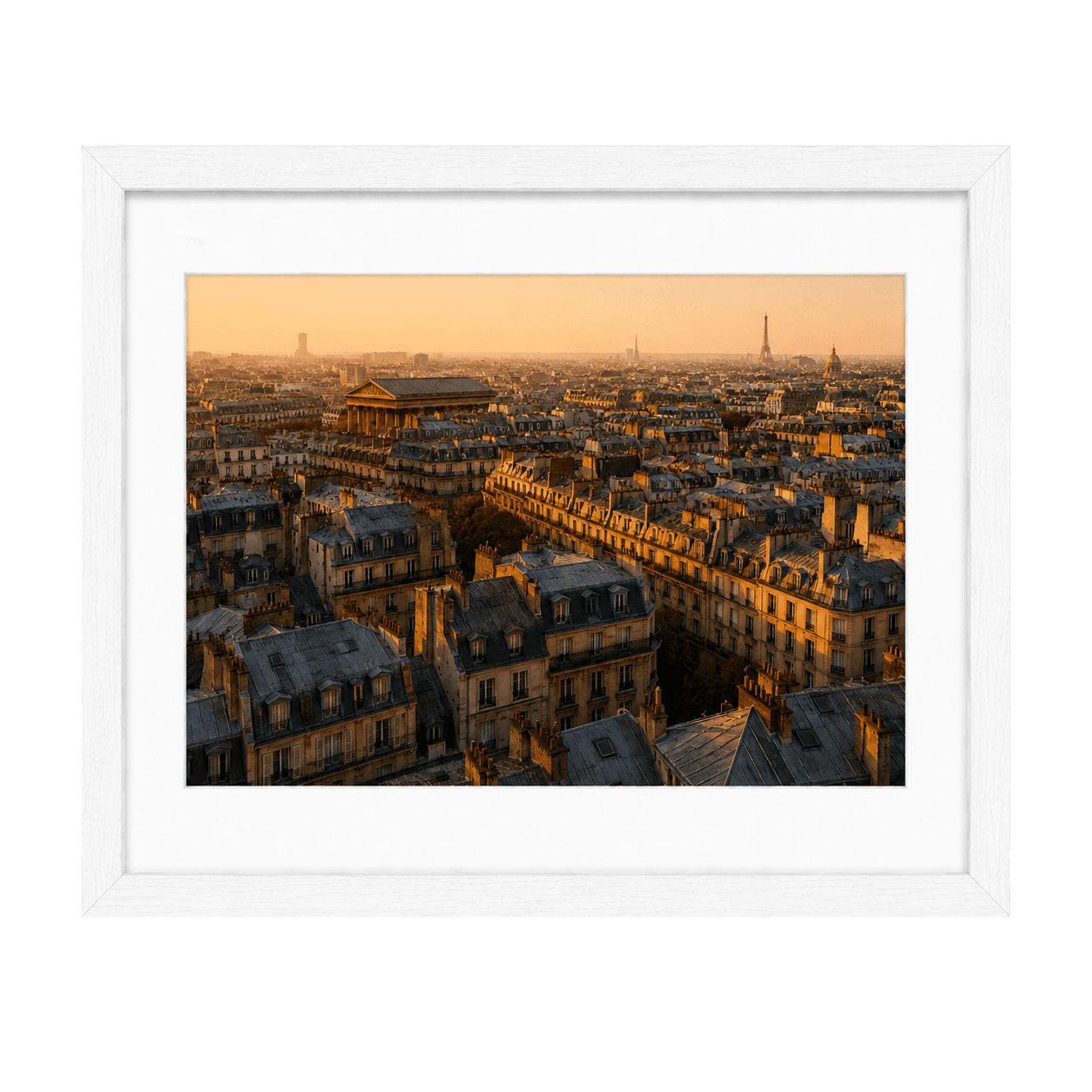

Above the City$142.00 USD
Preparing the gallery…
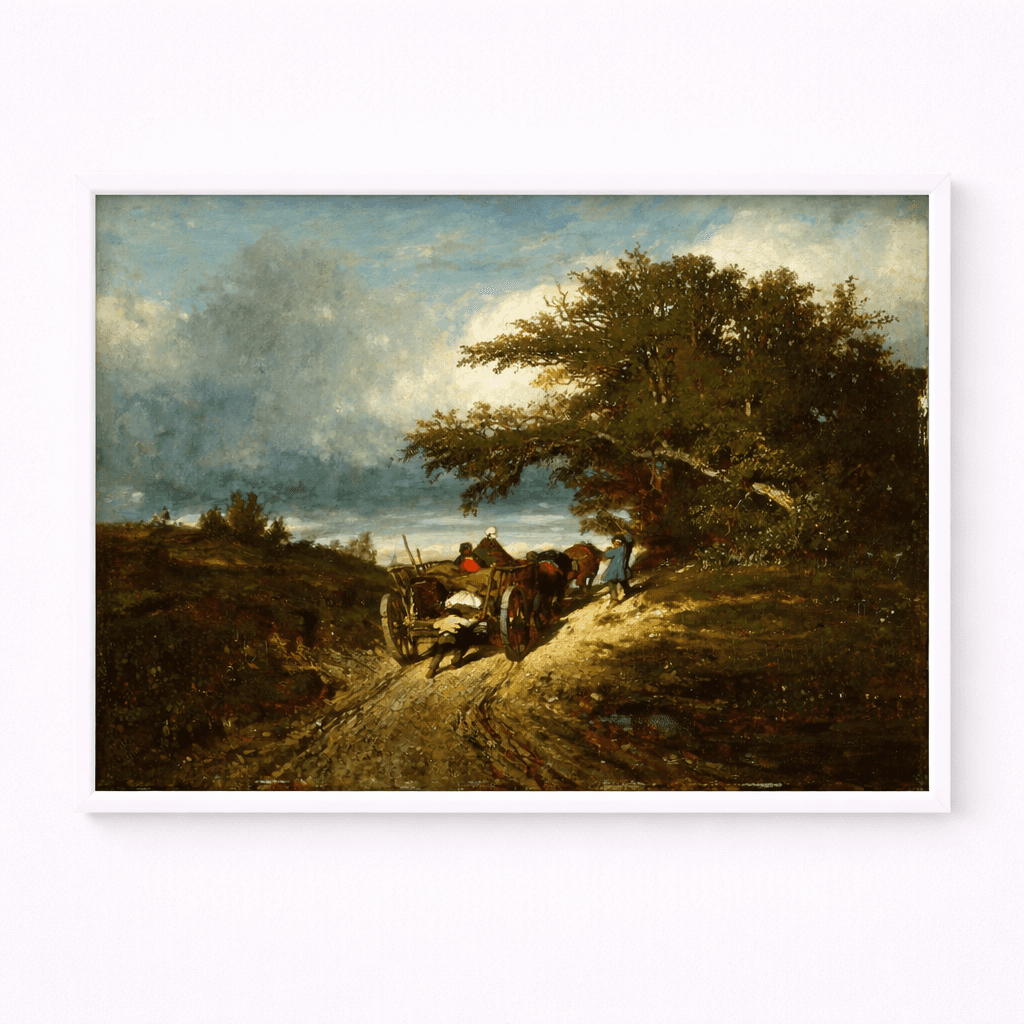
On the Road (1856) by Jules Dupré is a vivid example of the French Barbizon school’s devotion to natural landscape painting. The composition depicts a rural cart laboring up a rugged path beneath a vast, shifting sky, dominated by a powerful oak tree whose foliage catches the light. Painted in 1856, the work reflects Dupré’s mature style, characterized by expressive brushwork, earthy tonalities, and a dramatic treatment of atmosphere. As a leading figure of the Barbizon movement, Dupré sought to portray nature directly and truthfully, often emphasizing its emotional and elemental force. On the Road belongs to a period when French artists increasingly turned away from academic classicism toward realistic depictions of rural life. The painting stands as a testament to Dupré’s role in shaping mid-19th-century landscape painting and influencing later developments in naturalism and Impressionism.
READ MORE⌁ 7 Low stock
$129.00 USD
Tax included.
Secure checkout is represented as a local demonstration only.
The work
On the Road (1856) by Jules Dupré is a vivid example of the French Barbizon school’s devotion to natural landscape painting. The composition depicts a rural cart laboring up a rugged path beneath a vast, shifting sky, dominated by a powerful oak tree whose foliage catches the light. Painted in 1856, the work reflects Dupré’s mature style, characterized by expressive brushwork, earthy tonalities, and a dramatic treatment of atmosphere. As a leading figure of the Barbizon movement, Dupré sought to portray nature directly and truthfully, often emphasizing its emotional and elemental force. On the Road belongs to a period when French artists increasingly turned away from academic classicism toward realistic depictions of rural life. The painting stands as a testament to Dupré’s role in shaping mid-19th-century landscape painting and influencing later developments in naturalism and Impressionism.